Rewards
Designed reward-led challenges within the Lloyds Banking Group retail app to deliver financial value, reward loyalty, increase engagement, and drive commercial impact through market-leading digital experiences.
- Status
- Live as of January 2026
- My role
- Senior Product Designer
- Duration
- 5 months
- Team
- UX, UI, content, researcher, engineers, product + stakeholders
Tags
The problem
To drive customer re-engagement within the retail banking app, we explored how to reward loyalty across Lloyds Banking Group’s 22 million digitally active customers. The objective was to create a stronger reason for customers to return to the app, increase adoption of new and underused banking products and services and, fundamentally, reward positive financial behaviours.

Customer relationships with brands are no longer purely transactional or functional; they are increasingly shaped by broader expectations of value, relevance, and reciprocity.
To encourage repeat engagement and deepen loyalty, customers now expect tangible benefits in return for their continued relationship with a brand, commonly through points schemes, discounts, or cashback. These rewards often span both essential spending, such as groceries and housing costs, and discretionary spending, including gym memberships, holidays, and entertainment.
The opportunity was to make sure Lloyds Banking Group delivers a relationship experience that meets the standards customers already expect from other brands in their daily lives.
My role in this project
As Senior Product Designer, my role included — but was not limited to — the following:
- Defining and shaping the overall problem space and product direction.
- Partnering with product teams to gather, challenge, and refine requirements.
- Identifying system, technical, capability, and delivery-time constraints that impact delivery.
- Structuring and leading agile ways of working to align engineering, product, and business stakeholders.
- Managing stakeholder relationships across competing priorities and balancing conflicting needs.
- Leading collaborative activities throughout the project lifecycle, including design critiques, workshops, and show-and-tells.
- Establishing the most effective workflow for each project.
- Ensuring adherence to internal and external governance requirements, including Financial Conduct Authority regulations and World Wide Web Consortium accessibility guidance.
- Owning and delivering the end-to-end design process: discovery, journey mapping, research, ideation, iteration, low- to high-fidelity design, and production-ready outputs.
Dual-track approach to rewards
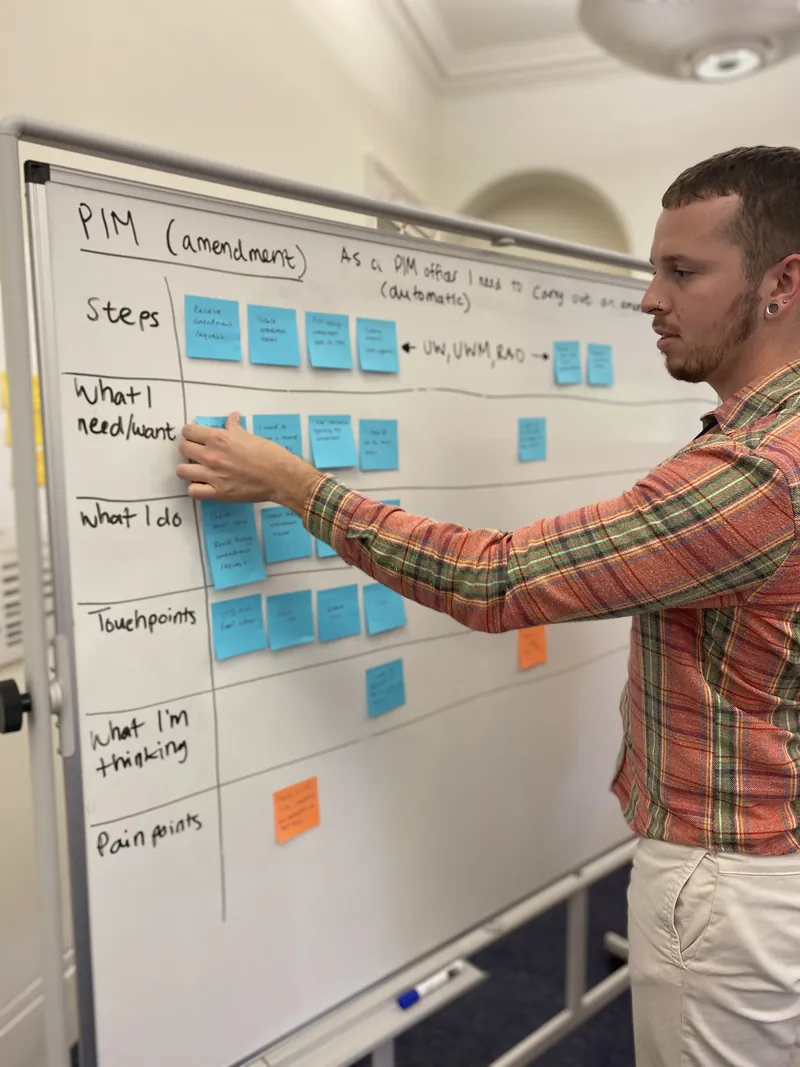
With the rewards space validated by the discovery team and the business on board, I negotiated resource to get the team in position. This led to a dual-track approach, splitting the Rewards team in two: the rewards hub and challenges.
I led the Challenges team and worked with the rewards hub Senior Product Owner to orchestrate this approach in line with skillset allocation and business needs.
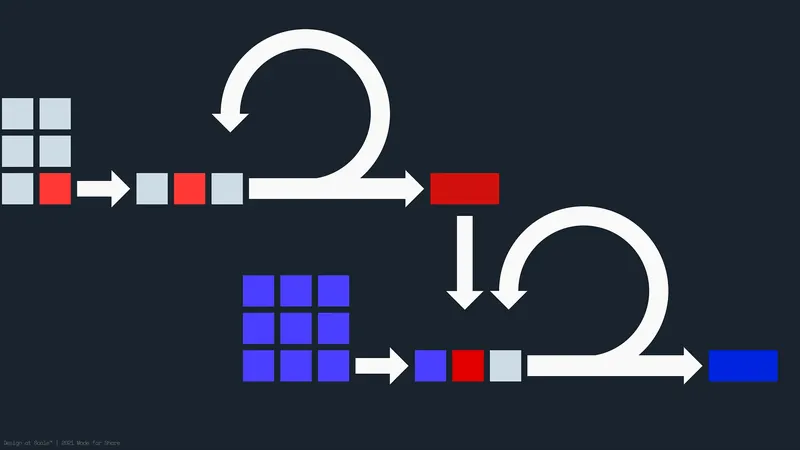
Discovery
To better understand customer sentiment towards challenges, I worked closely with the discovery team (a team dedicated to running discoveries). The discovery included these activities:
Diary study
Understanding daily spending behaviours, approach to finances, mental models and life-stage moments.
Competitor analysis
Understanding the rewards landscape through a market analysis of competitors.
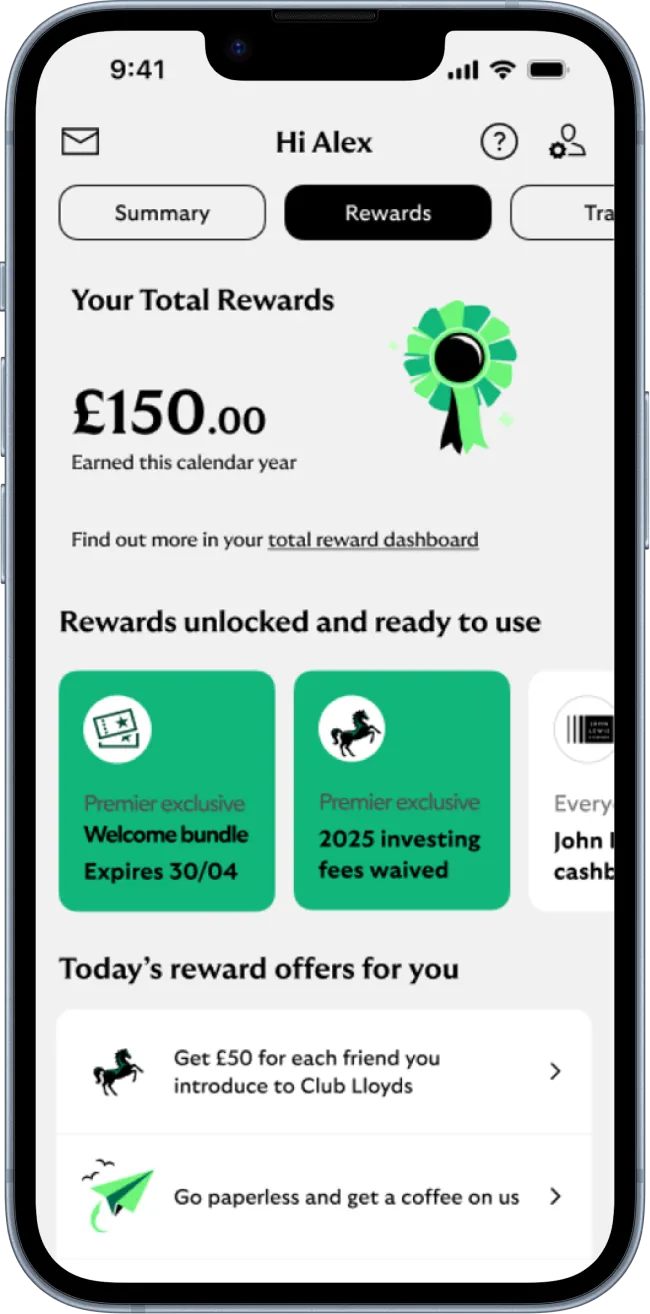
Prototype
Creating a prototype and testing it with users to validate assumptions.
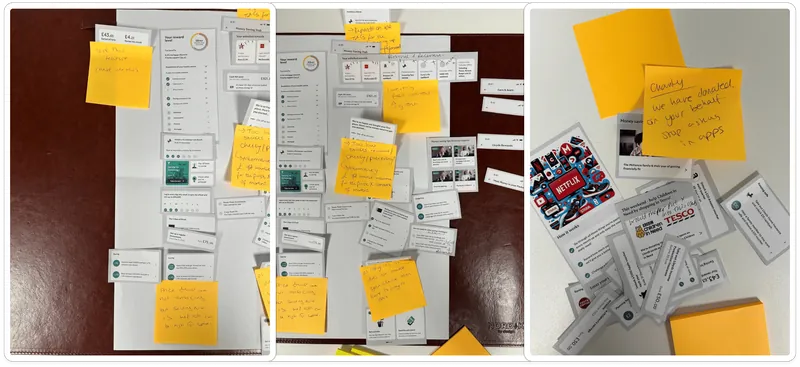
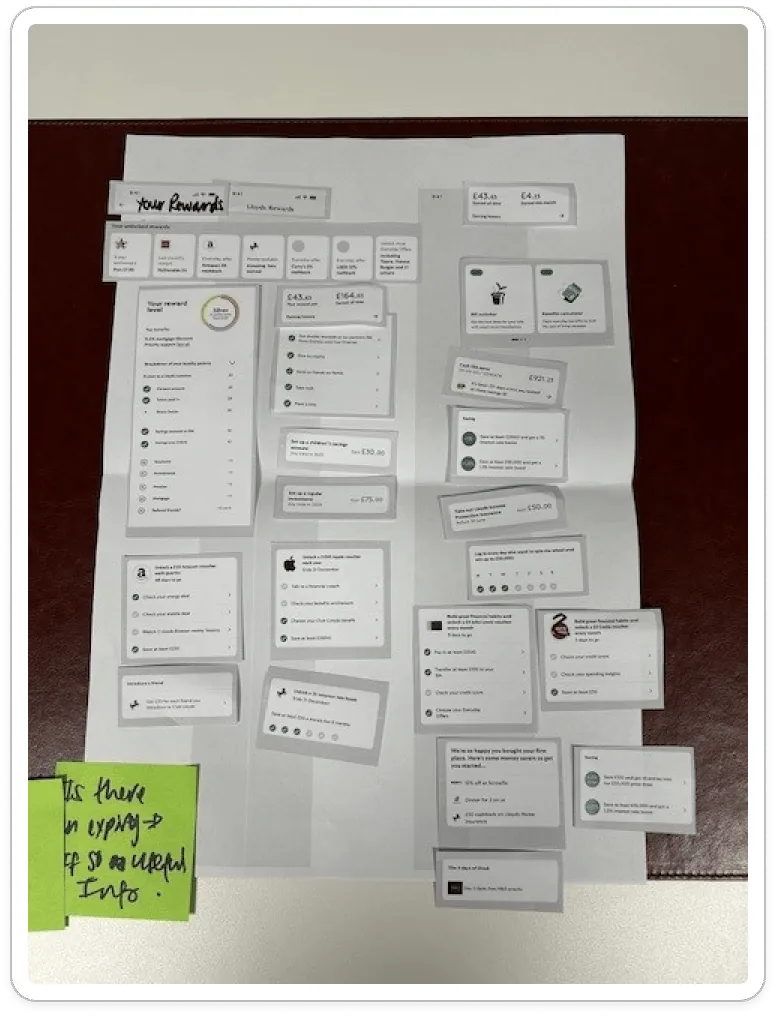
Co-creation
Asking customers to create their own rewards space using modular parts such as points, rewards and challenges.
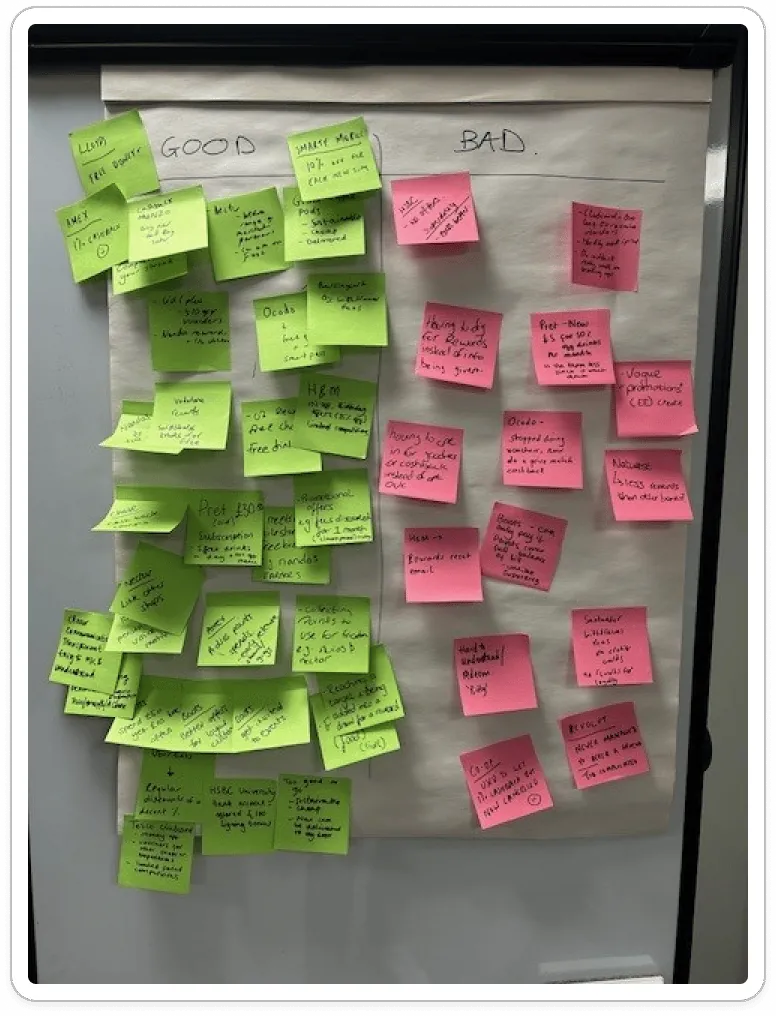
Key findings from discovery
‘I love the idea of earning better rewards’
‘Rewards should be little luxuries’
‘Make rewards and challenges relevant’
‘Give me a reason to return’
‘Offer me more than Amex if you want me to engage’
‘Familiar with rewards, but not through their bank’
Emerging personas

Pragmatic value-conscious saver
Prioritises practical, realistic, and cost-effective solutions when spending and saving.

Financially organised minimalist
Simplifies their financial life and cuts unnecessary expenses.

Convenience-seeking saver
Wants a time-saving shopping experience while still finding value and saving money.

Savvy deal-finding planner
Uses smart shopping strategies and plans with organisation tools.

Prudent student
Budgets wisely and avoids unnecessary spending to make thoughtful financial decisions.
The strategy
 The vision
To create a dynamic, personalised and gamified rewards space that transforms how customers discover, track and unlock rewards. The experience should be effortless, engaging and habit-forming, encouraging customers to interact frequently and build positive financial habits.
Value proposition
Personalised experience
- £ value amount
- Featured rewards
- Spotlight reel specific to products, tools and features
Effortless experience
- One-tap reward redemption
- Easy navigation to rewards spaces
Dynamic, personalised insights
- Save the Change insights
- Missed reward opportunities
- Real-time changes
Real-time progress tracking
- Visual indicators of task progress on the rewards hub
 Target customer
3 mass-market segments
- Rising Metropolitans (RMs)
- High Income Professionals (HIPs)
- Asset Rich Greys (ARGs)
Mass affluent (Premier customers)
Private banking
 How do we reach them?
In-app
- Prominent static entry point
- Dynamically appearing in other app spaces
- Search
Push notifications
Marketing campaigns
- Email deep linking
- Above-the-line marketing
 Success metrics
Engagement
- Unique visits to the space
- Repeat visits to the space
- % of focus segments visiting the space
- Increased revenue
- Increasing task completion rate
- Increasing reward unlock rate
Scalable and adaptable design and build considerations
Revenue impact: growth of Other Operating Income
Positive customer retention rate
Increased CSAT score
Increased ease-of-use score
Objectives and key results (OKRs)
OKRs provide a goal-setting framework that drives focus, alignment, and engagement by defining ambitious goals (objectives) and measurable ways to track progress (key results).
-
Annual visits
Opportunity70mvisitors Key result100m- Tailwinds
- Monthly prize draws to be included.
- Headwinds
- No leads or internal marketing.
-
Offer redemption
Opportunity0.4mredeemers Key result1m- Tailwinds
- Offers always activated (for highly relevant brands).
- Headwinds
- Improve UX to aid discoverability.
-
CSAT score
Opportunity2.9stars Key result4.0stars- Tailwinds
- Broadening offer types through commercial relationships.
- Headwinds
- Initial customer reaction to the change of space.
Epics
- Broaden the impact of rewards across the full customer base
- Optimise the conversion of rewards and benefits
- Correlate the size and scale of rewards to customer value
Epic metrics
- More customers: total redemptions, total value amount
- More conversion: average number of redemptions, average value amount
- More value: average completed challenges, average redemptions
Features
- New reward products, Benefits Calculator, Bill Switcher, prominent entry point
- Reward space, merchant participation, journey and user enhancements
- Challenges, differentiation, Premier rewards
Fake door testing
To supplement the discovery findings, I implemented a fake door ahead of the challenges MVP. This would help validate challenges specifically, and rewards more broadly, giving us data to use as leverage when negotiating with stakeholders and when setting UX expectations for challenges with the delivery team.
- Status
- Deployed December 2025
Screen recording of the fake door entry point and survey in the app. No audio.
Survey responses
With over 3,900 responses in just a week, the team synthesised the results and concluded that we’d reached data saturation, so we paused the survey. The third-party survey tool also billed the bank per respondent, so continuing was becoming less commercially viable.
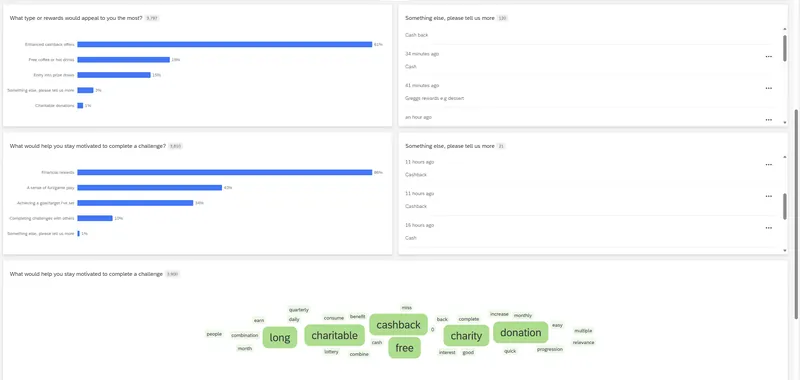
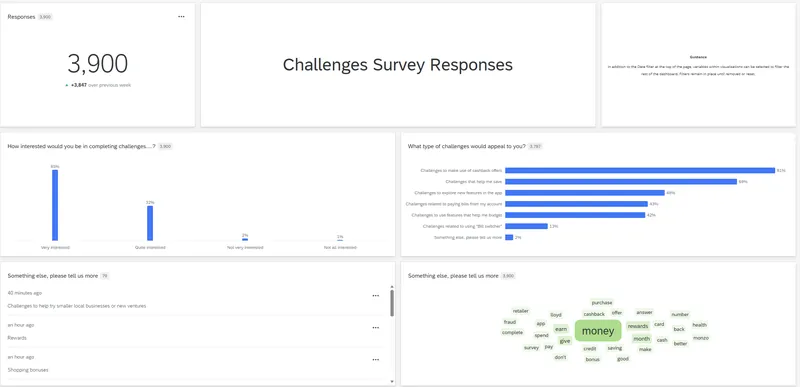
Key findings from the fake door test
People want cashback rewards
Financial rewards are most desired
97% of customers love challenges
Gamification is a key aspect
Challenge principles
Our discovery on the rewards space uncovered key challenge principles that reflect customers’ perceptions:
-
Value, unlocked
What
We create experiences where customers feel they’ve earned something meaningful: quickly, fairly and in proportion to what they’ve done.
How
- Match the size of the reward to the effort required.
- Clearly show what is being earned, and how to get it, upfront.
- Design challenges so the value feels immediately useful or satisfying, not abstract.
-
Always a reason to return
What
We design the space to stay fresh, dynamic, and worth checking back in, whether it’s a new challenge, limited-time perks or content that evolves with the customer.
How
- Introduce time-limited or rotating challenges to create urgency and curiosity.
- Use evolving content (tips, updates, seasonal perks) to keep the space feeling alive.
- Nudge return visits based on activity gaps, missed rewards or streak opportunities.
-
Personal, relevant, timely
What
We design around the individual: what they need, what they care about, and when they’re most likely to act. Relevance drives action. Timing keeps it effective.
How
- Surface challenges and rewards based on behaviour, goals, and usage patterns.
- Time nudges and prompts to moments of high intent or need.
- Avoid generic, one-size-fits-all content; tailor wherever it adds value.
-
Simplicity with purpose
What
We design experiences that are easy to navigate and act on: no clutter, no confusion. Everything should feel intuitive, premium and focused on helping the customer forward with confidence.
How
- Reduce noise; surface only what’s relevant, when it’s relevant.
- Guide users clearly through challenges with simple, well-timed prompts.
- Keep the space clean and consistent, so it feels purposeful.
-
Progress builds loyalty
What
We build experiences that create a sense of forward momentum. Every action should feel like it’s getting the customer closer to something: better habits, bigger rewards, or higher status.
How
- Show visible progress through streaks, milestones, or step indicators.
- Let customers see what’s next and how close they are to unlocking it.
- Reinforce achievement with clear visual feedback when a task is completed.
Assessing challenge opportunity
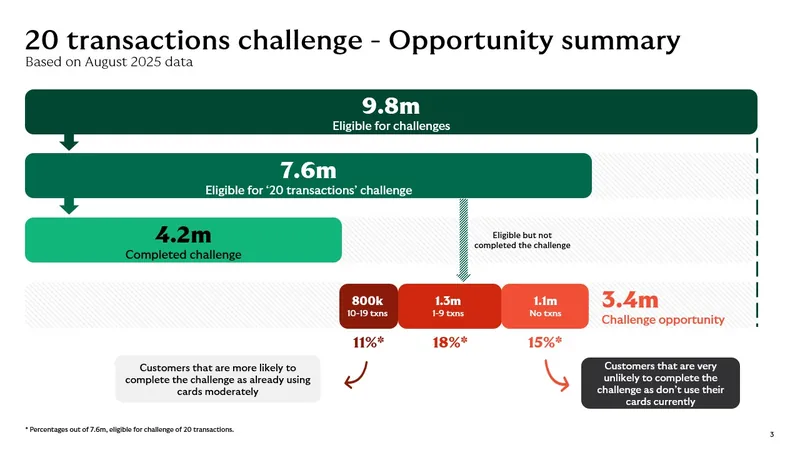
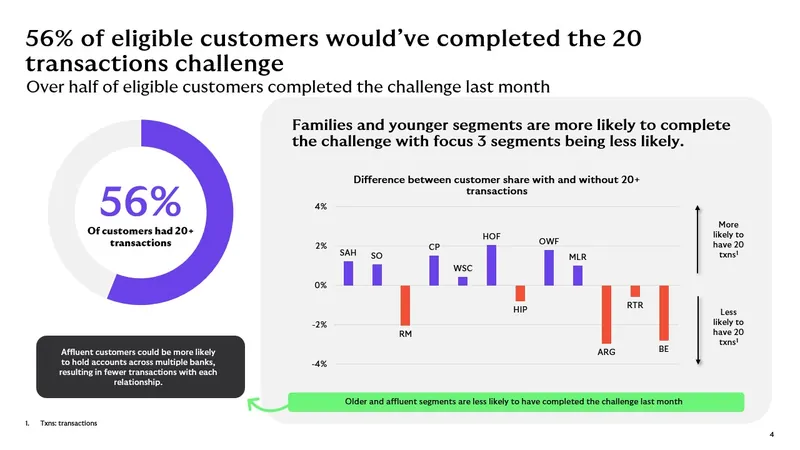
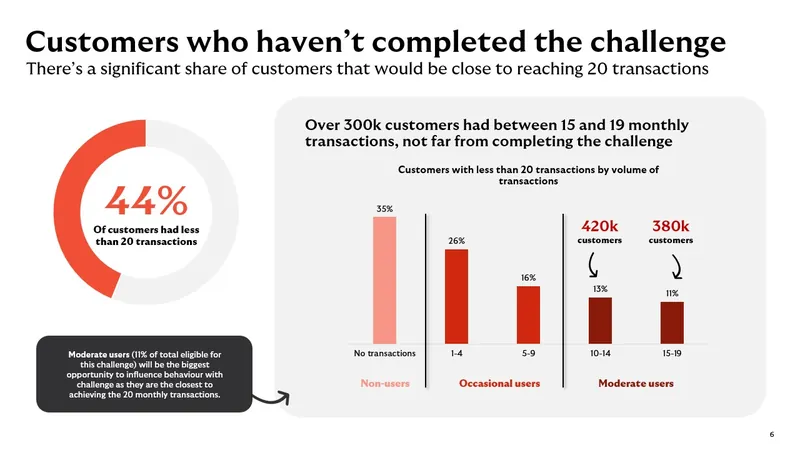
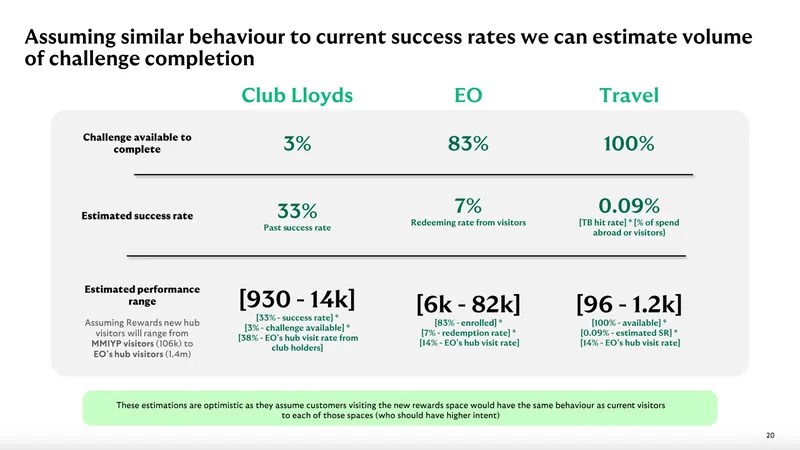
After creating a list of challenges, I raised the need to assess the opportunity for each one, so we could objectively prioritise them against each other (potential impact vs feasibility). I worked with my data analyst to do so.
Ideation
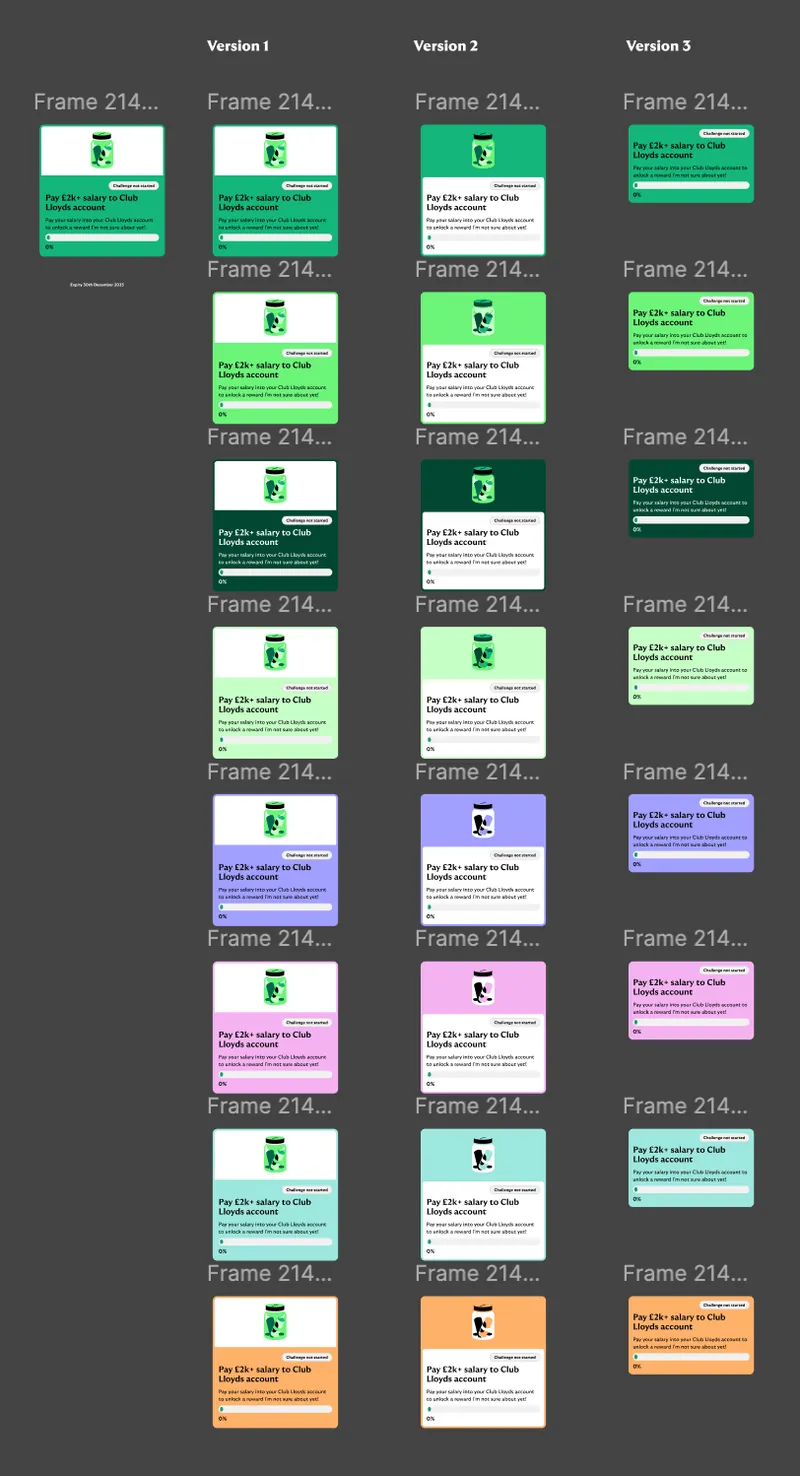
Iteration 1: initial challenges
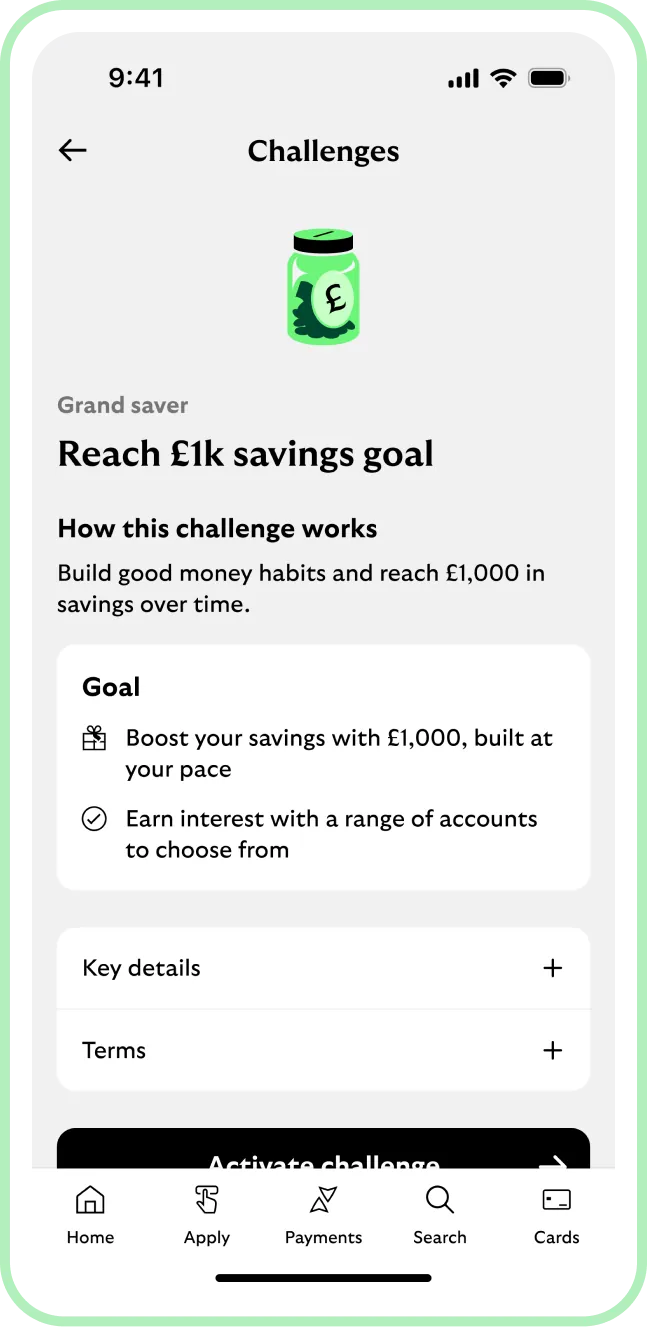
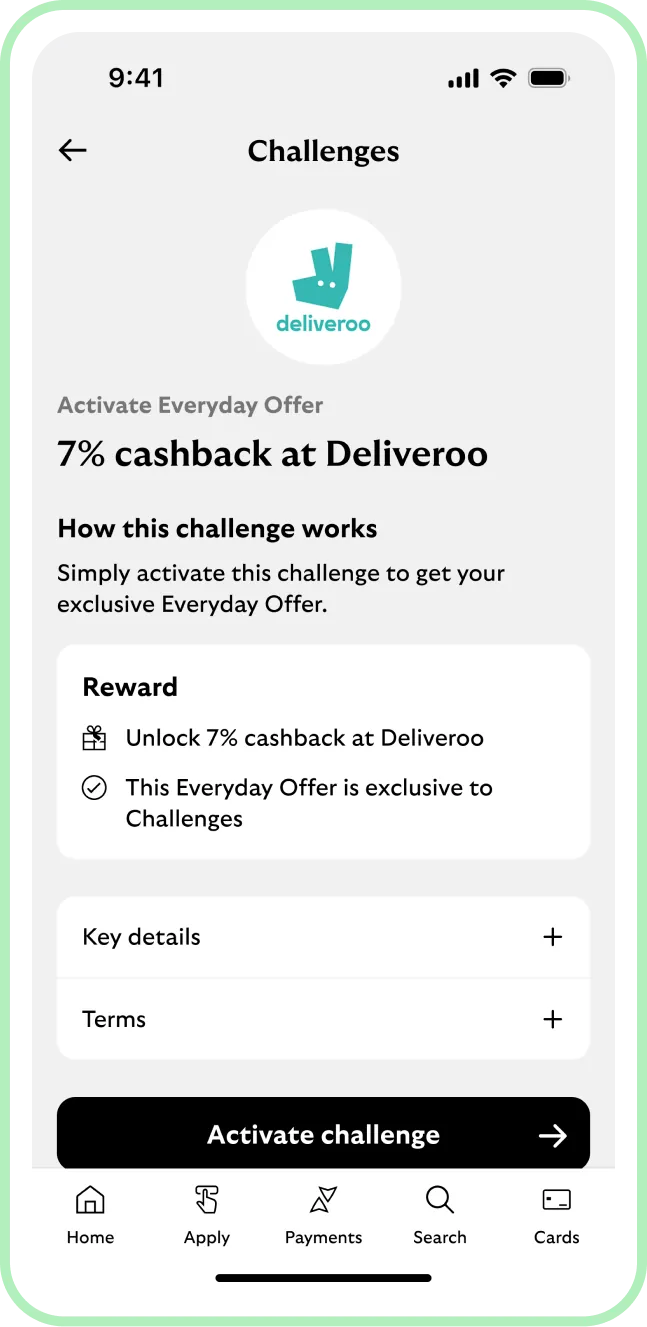
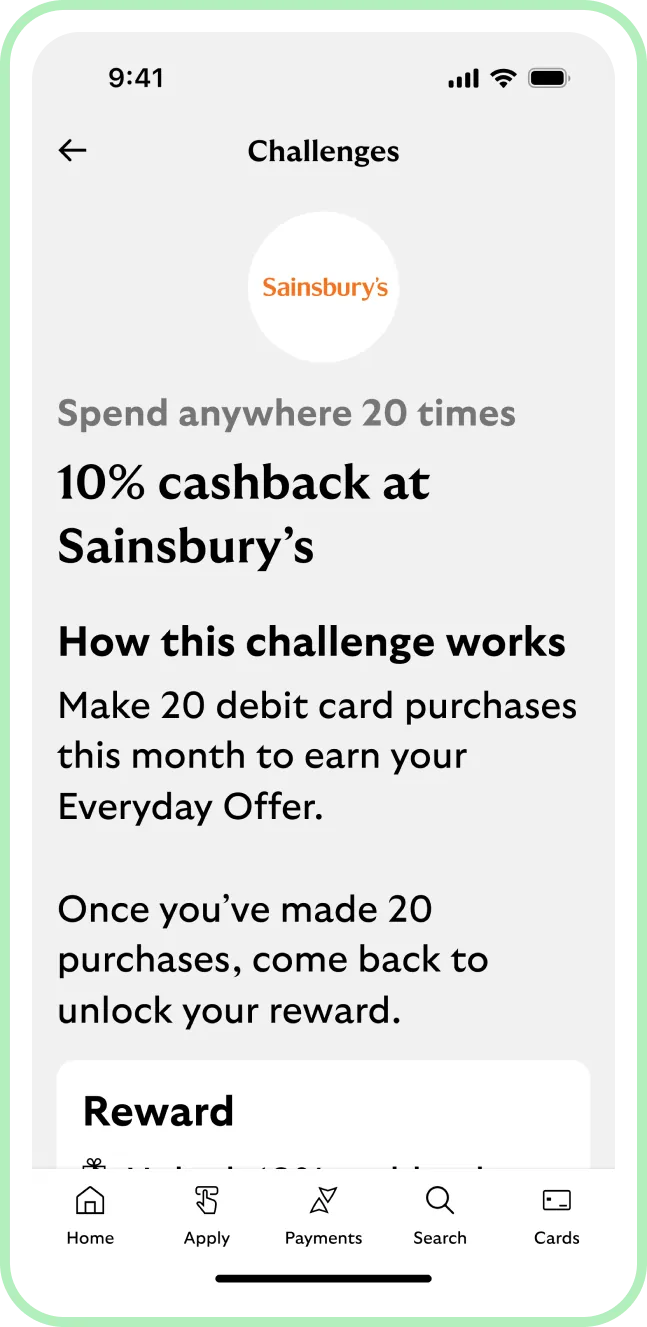
The MVP launched with three challenges: pay £2k into Club Lloyds, spend 20 times, and use an Everyday Offer.
- Status
- Deployed December 2025
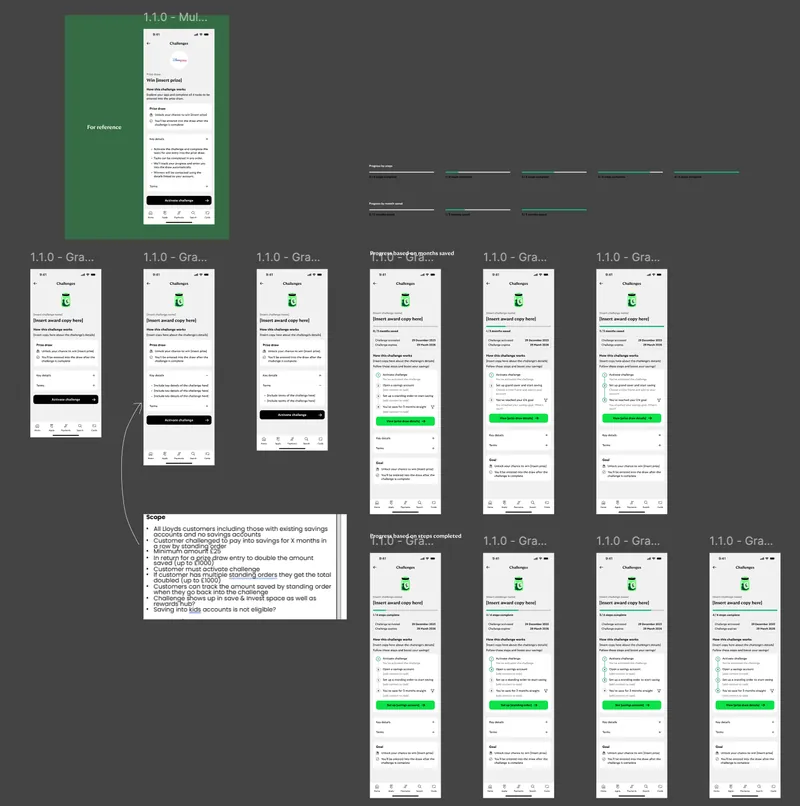
Restructuring the hierarchy
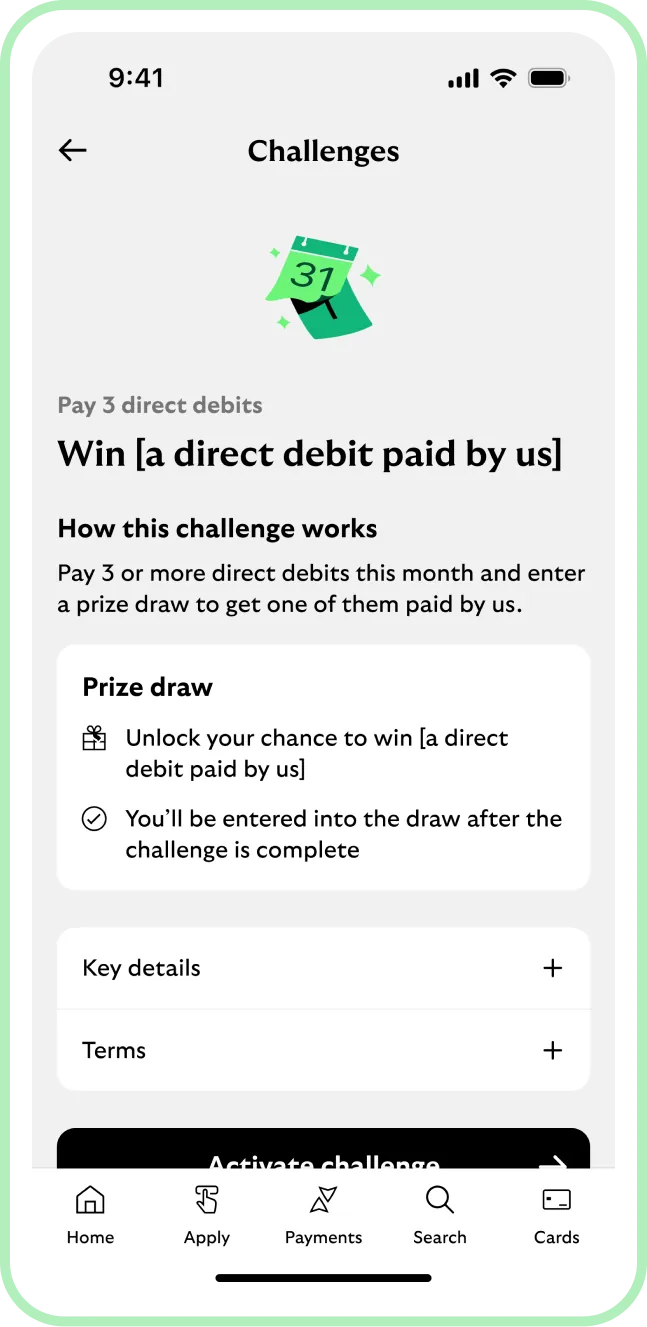
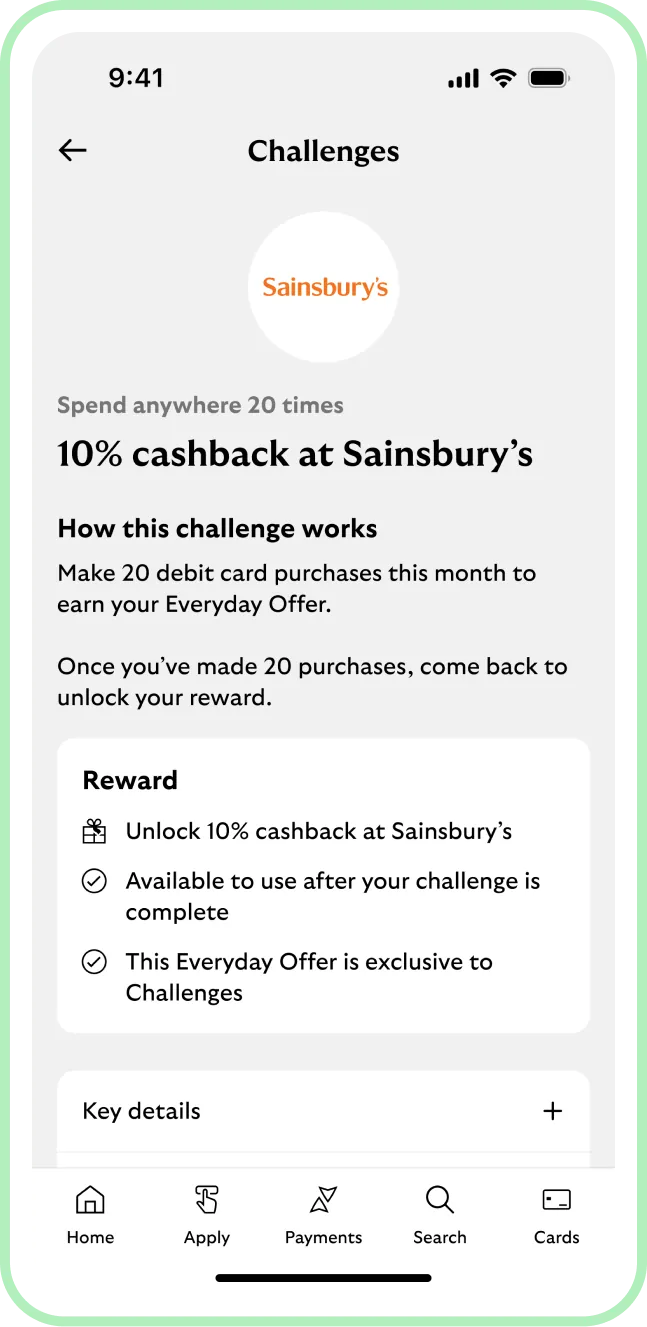
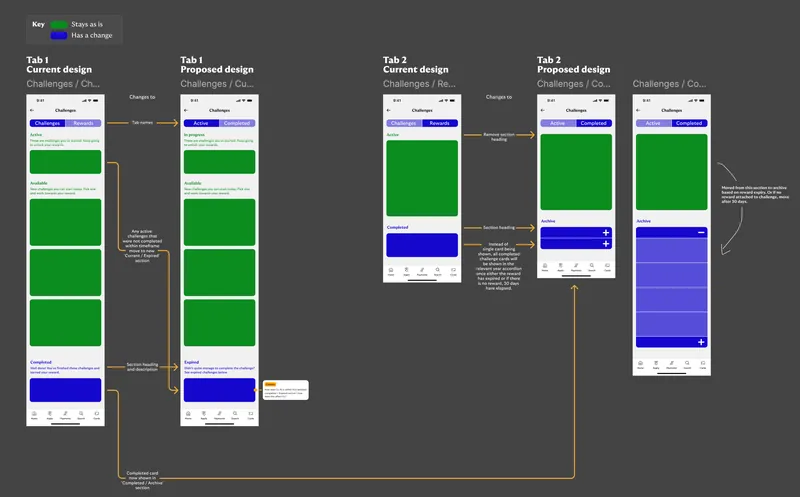
As more challenges were added, each developed its own nuances, especially around rewards, so the space’s naming conventions had to change. Some challenges had no tangible reward (for example a prize draw or completing a savings goal), which made the ‘Rewards’ tab unsuitable, so a redesign was necessary: Challenges became Active, and Rewards became Completed.
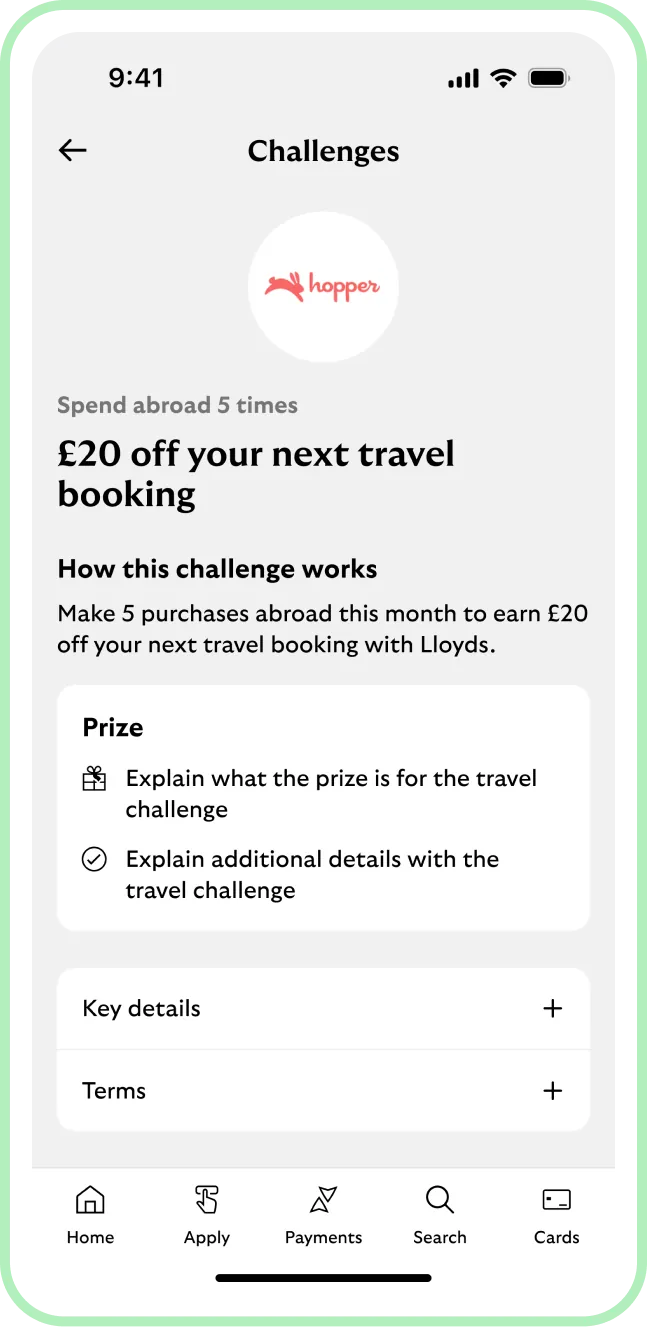
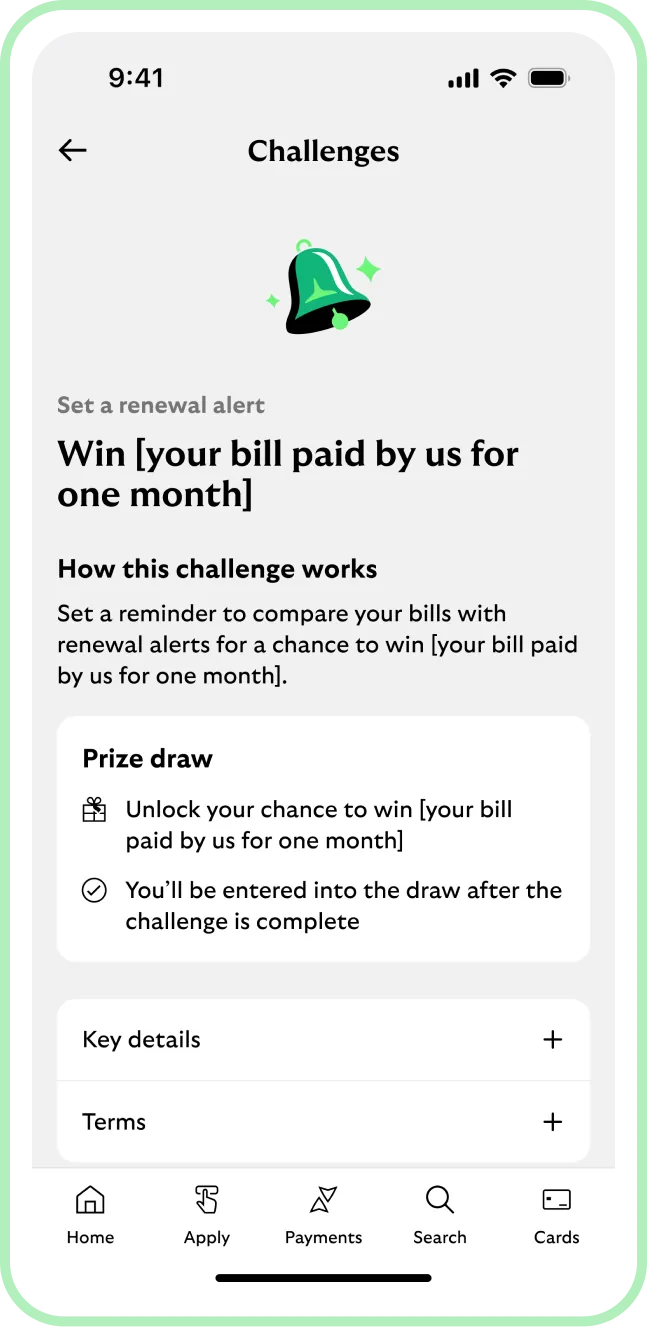
Iteration 2: additional challenges
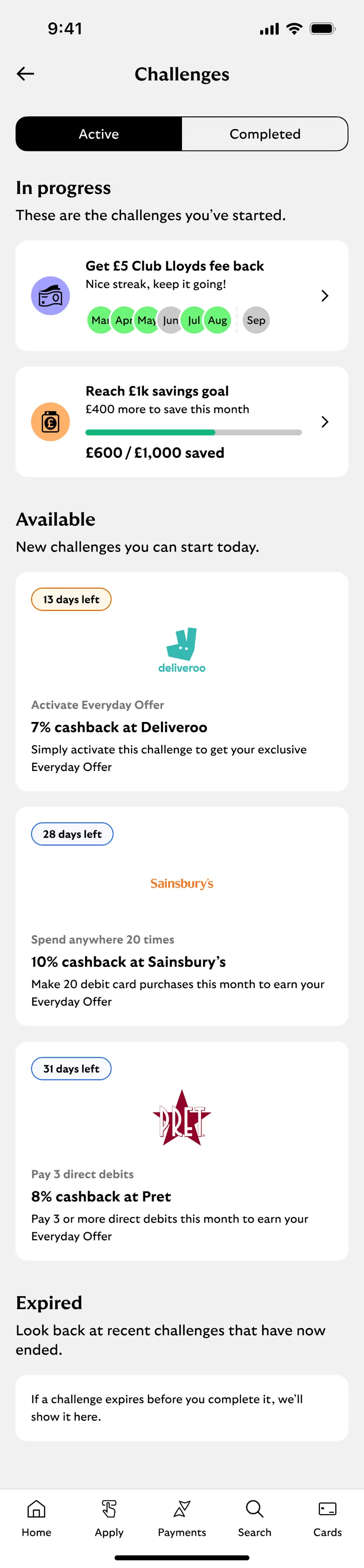
Version 2 added four challenges, taking the total to seven.
- Status
- Deployed November 2025
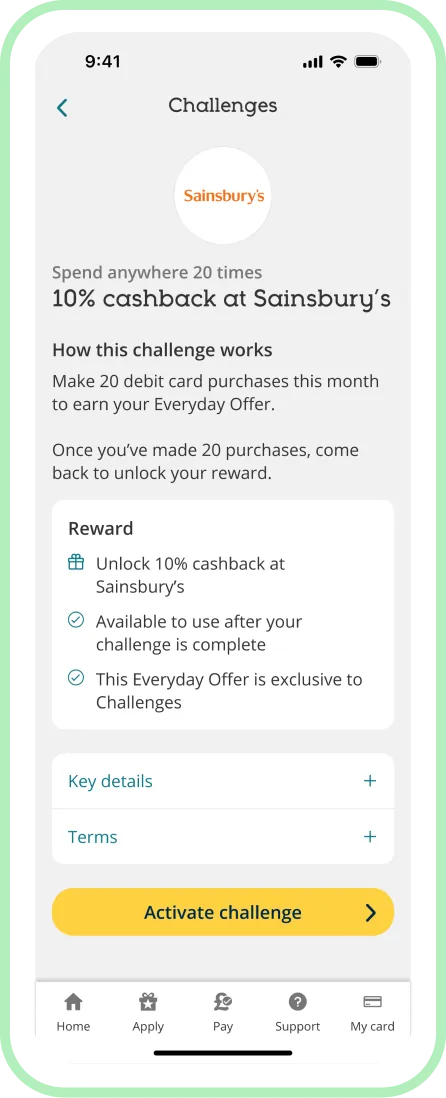
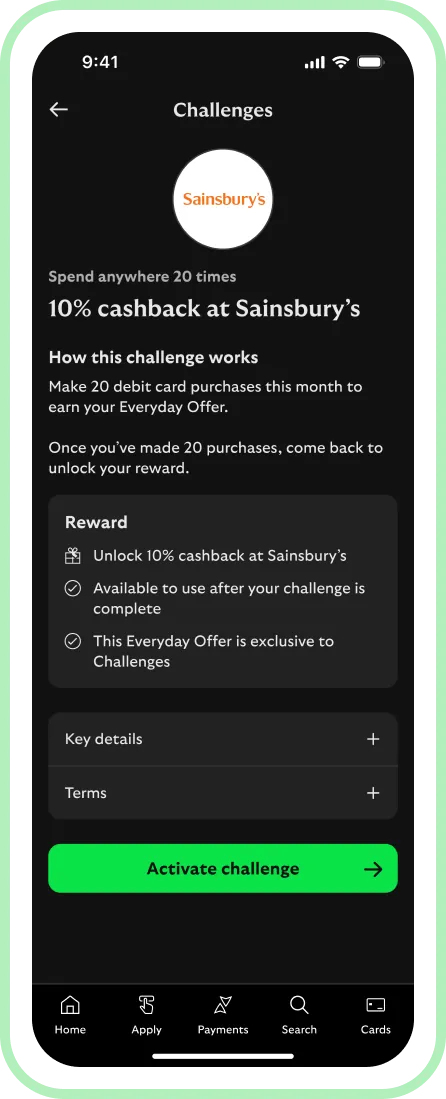
Iteration 3: brand versions
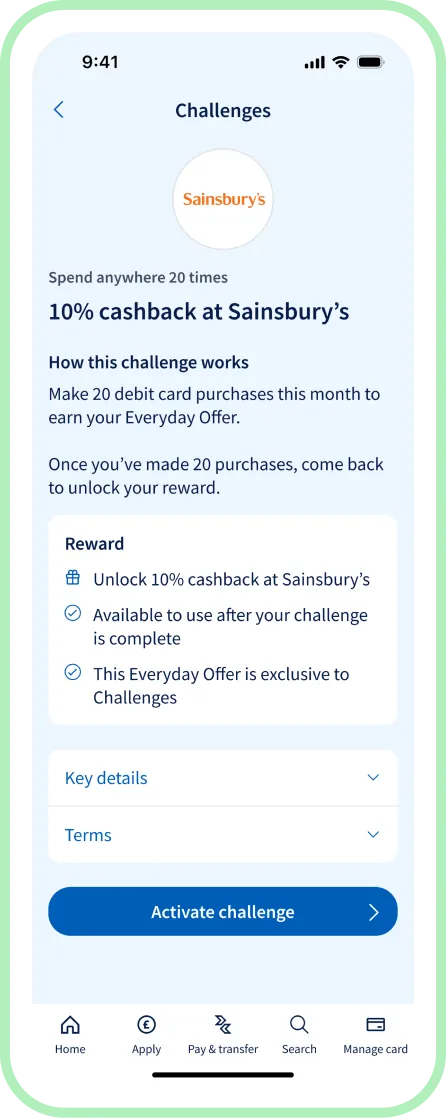
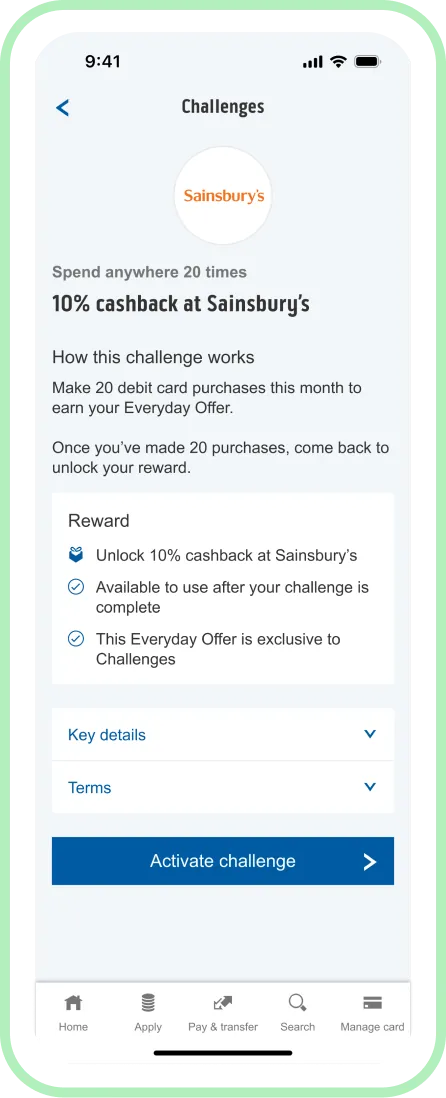
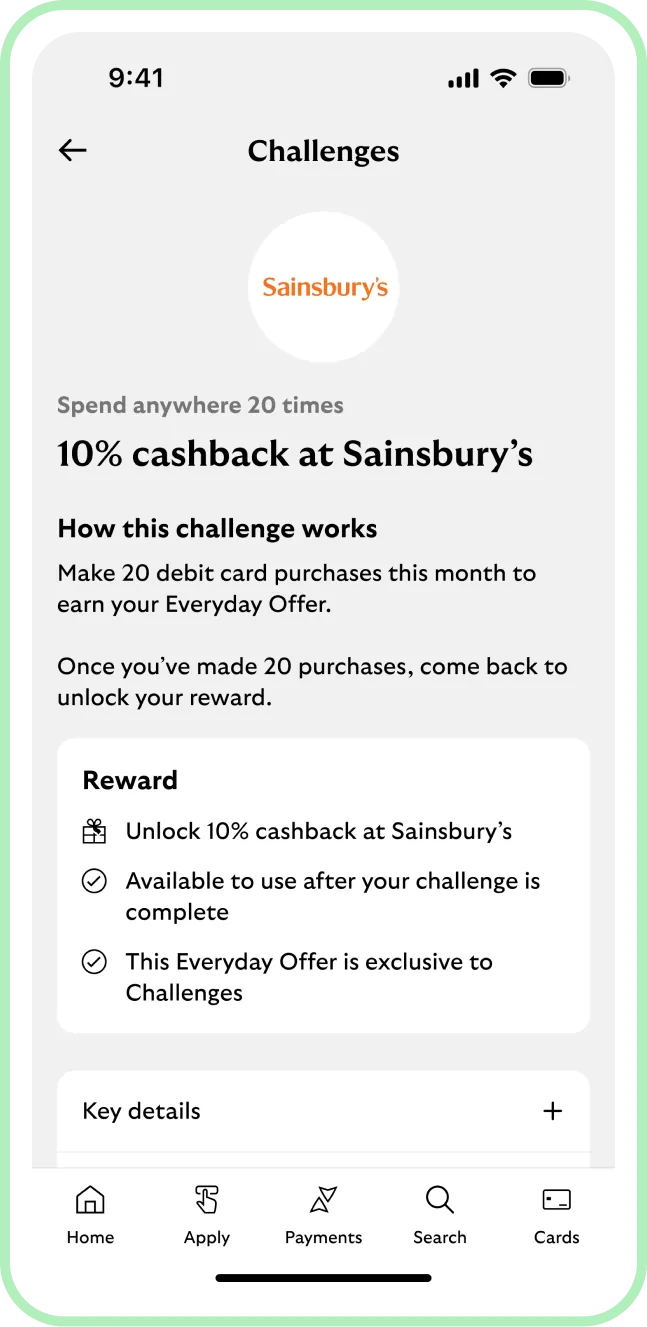
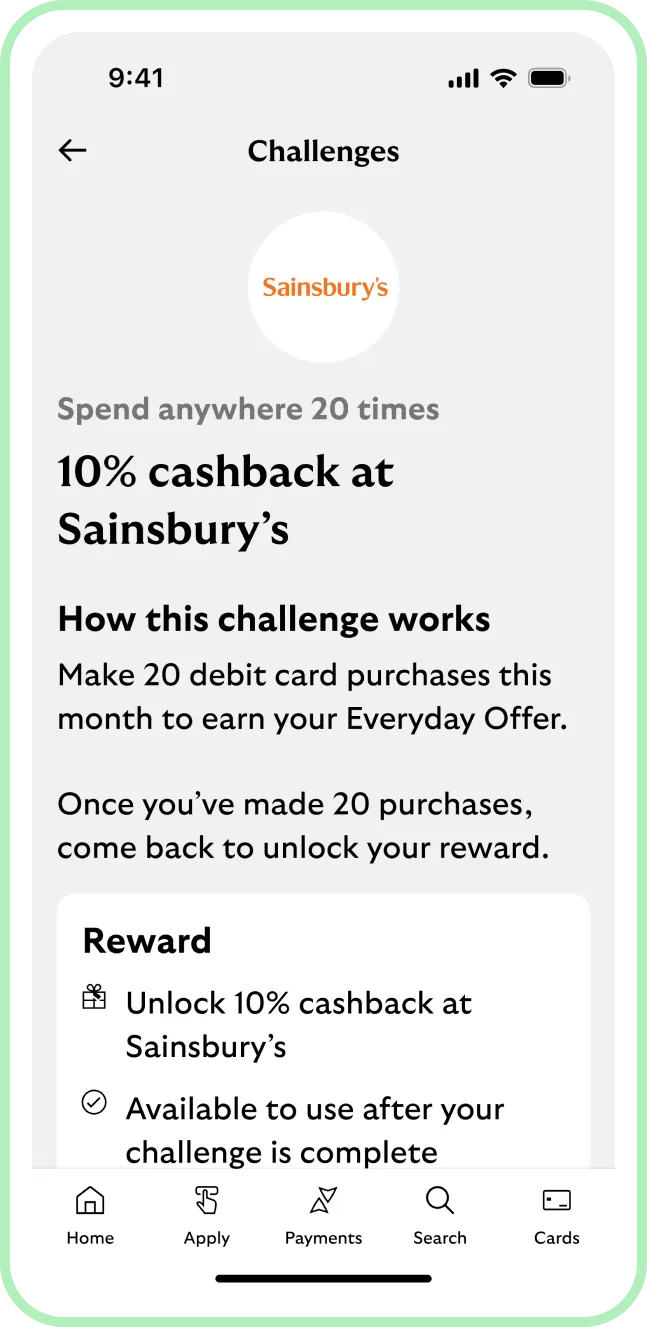
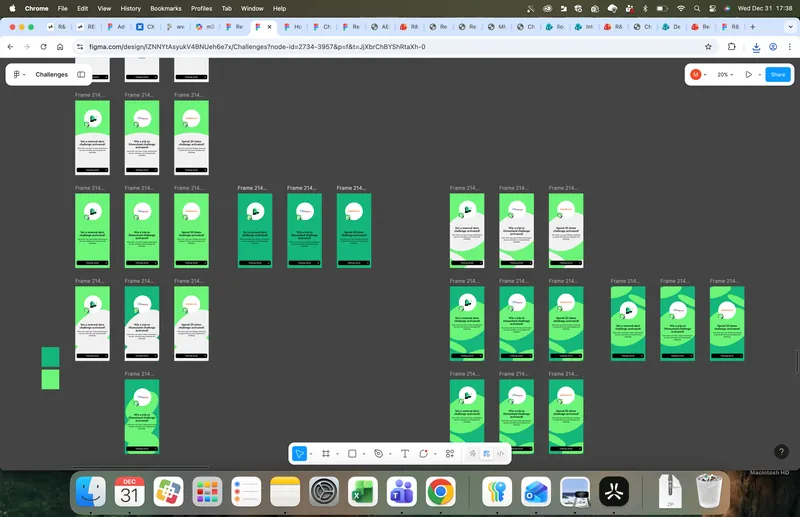
Lloyds Banking Group has multiple brands. To deploy designs for all of them, I created versions of each screen for every brand, for iOS and Android, for dynamic type (100% to 190%), and for widths from 320px to 1133px, covering mobile and tablet.
- Status
- Deployed December 2025
Brands
Dynamic type
Celebration ideation
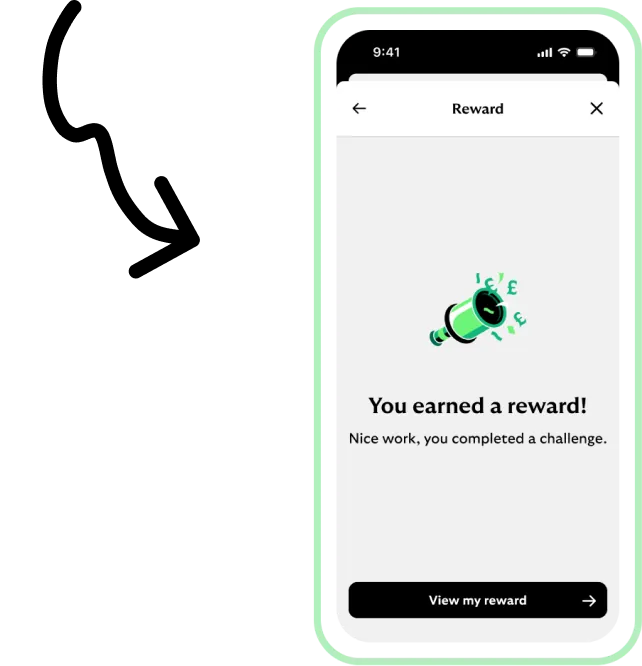
After the Rewards space gained serious traction with senior stakeholders, including the CEO, we worked with an infographic designer to create a sub-brand of the Cancara brand, bespoke for Rewards. As a result, we redesigned the celebration screen and introduced new motion-designed celebration and activation screens for challenges.
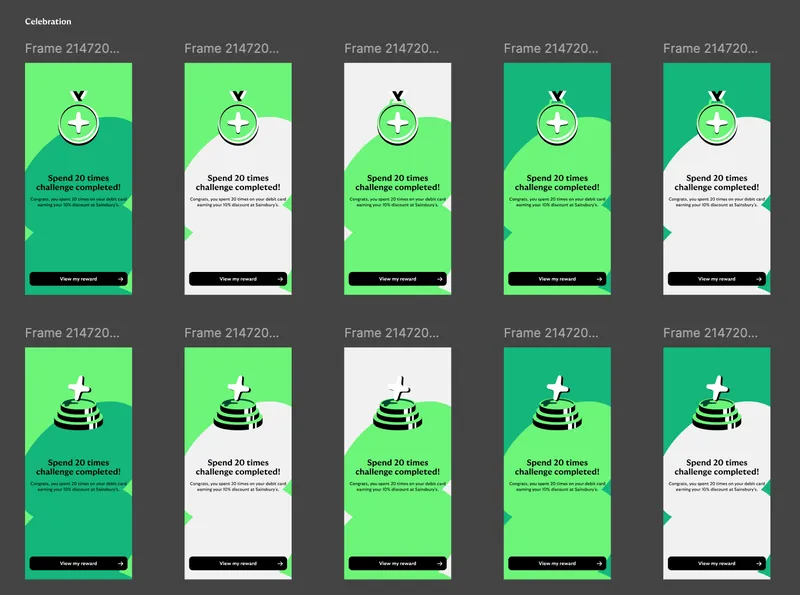
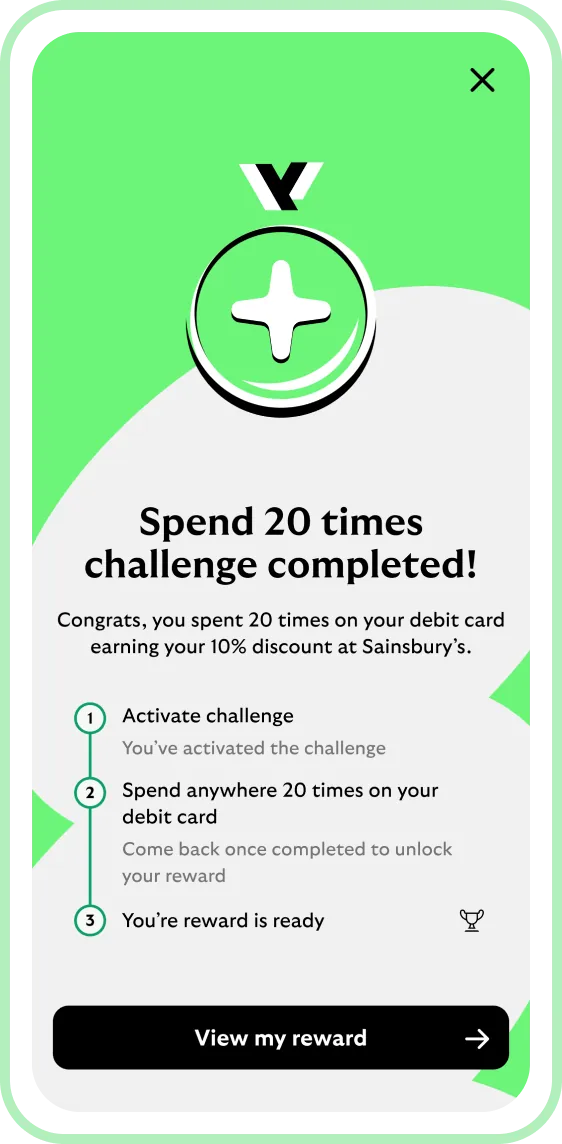
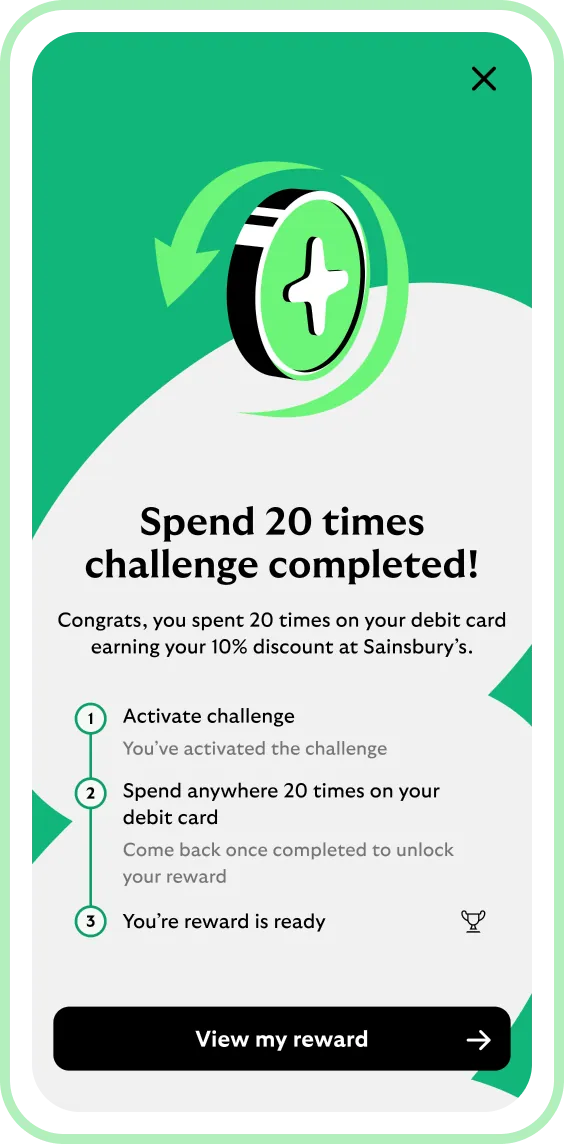
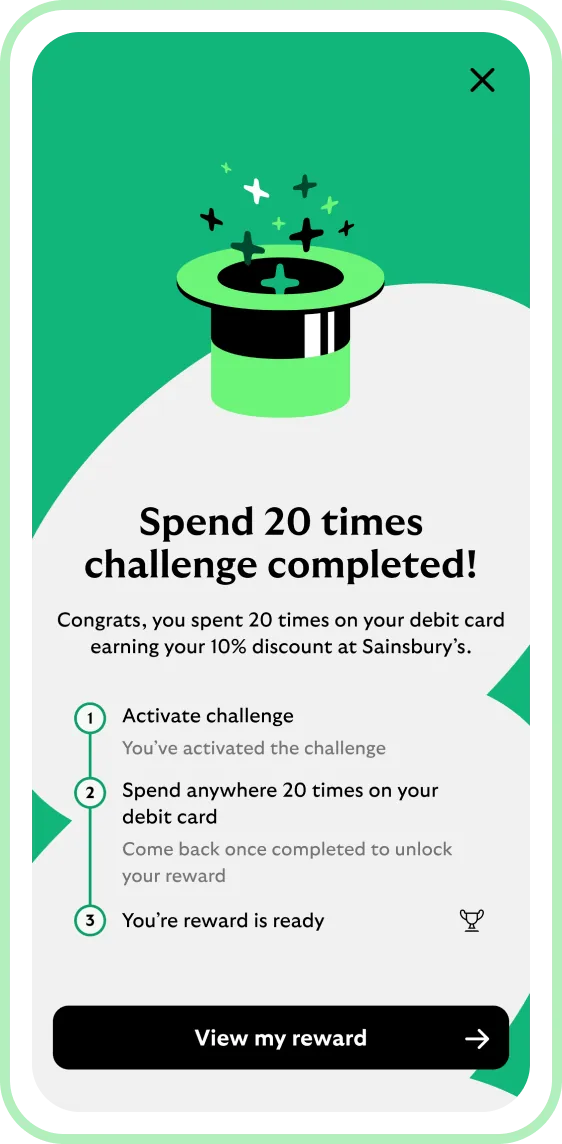
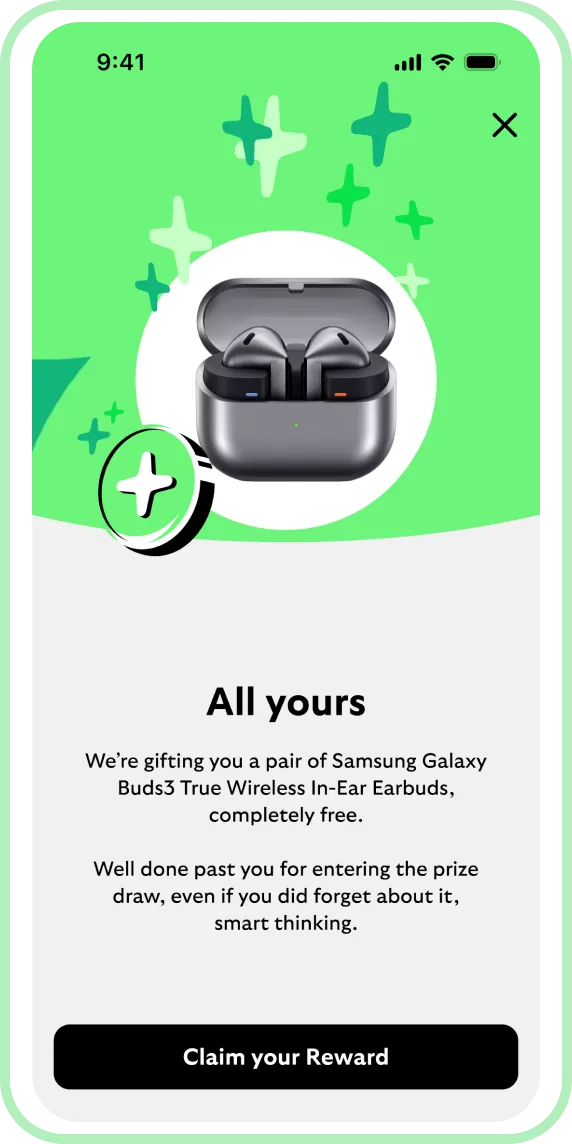
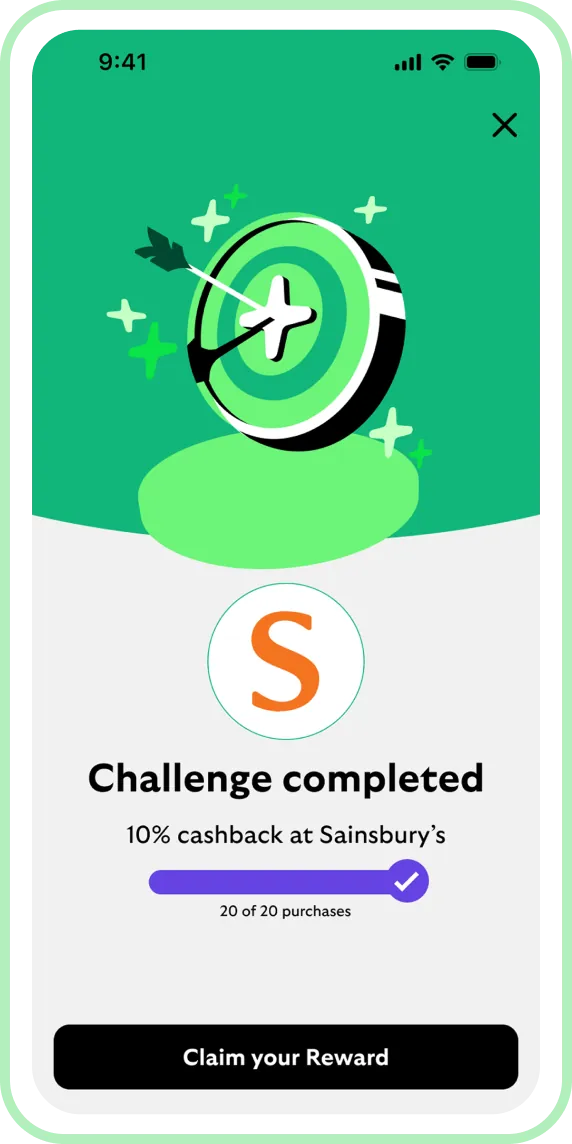
After a team crit and a conversation with the branding team, we chose which type of celebration and activation screens to take forward. I then ideated further on the agreed style.
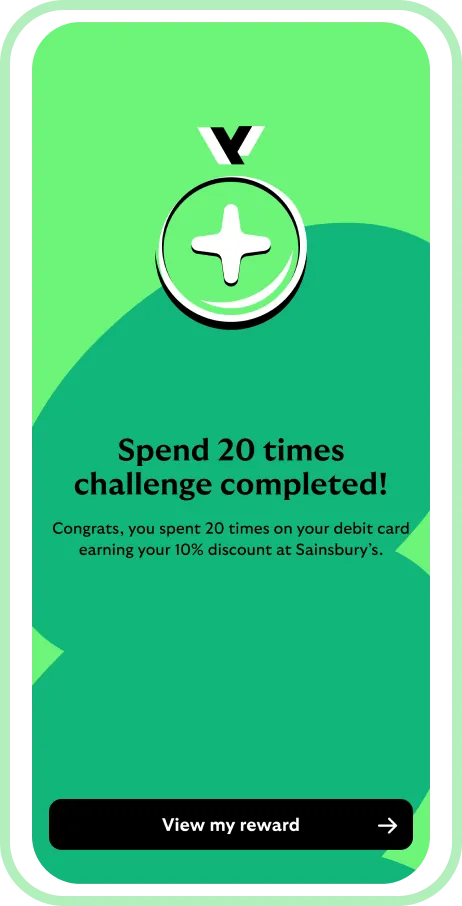
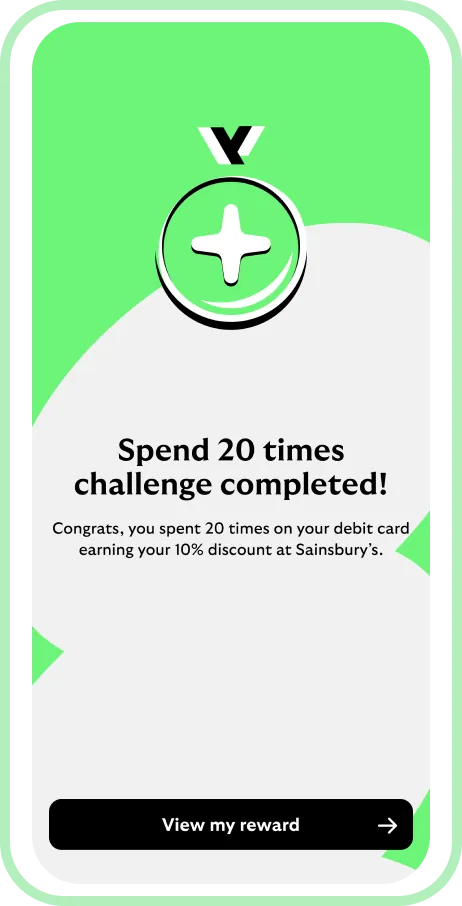
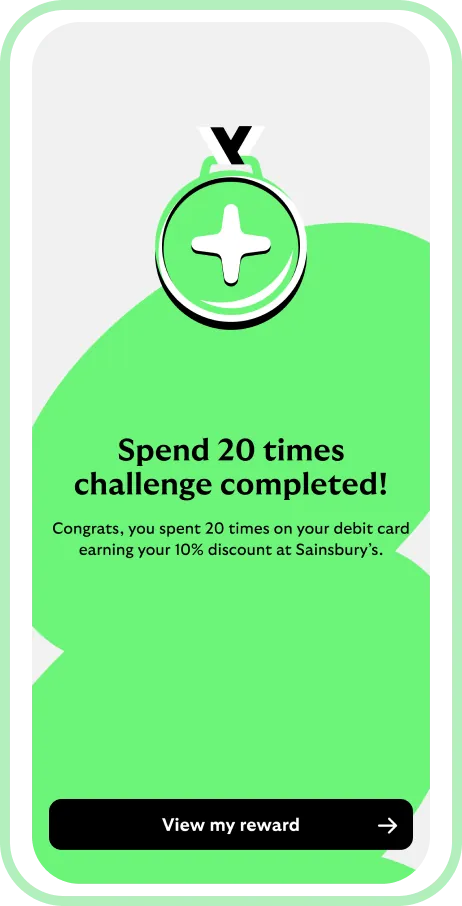
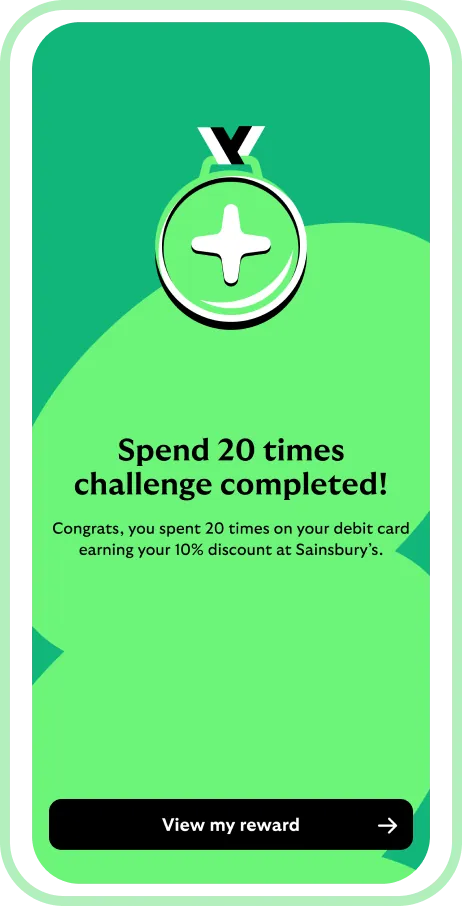
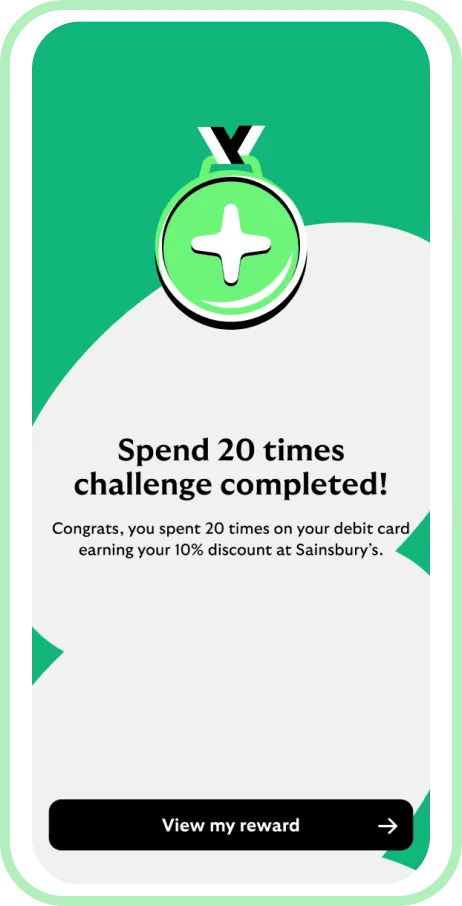
Final design: rebranded celebration and challenge activation screens
After many team crits and conversations with the branding team, I arrived at the solution below for our celebration and challenge activation screens. These provide enhanced visuals on par with customer expectations and are inclusive by design: they work whichever challenge is completed or activated. The more bespoke versions from ideation weren’t feasible to introduce at this stage.
- Status
- Deployed January 2026
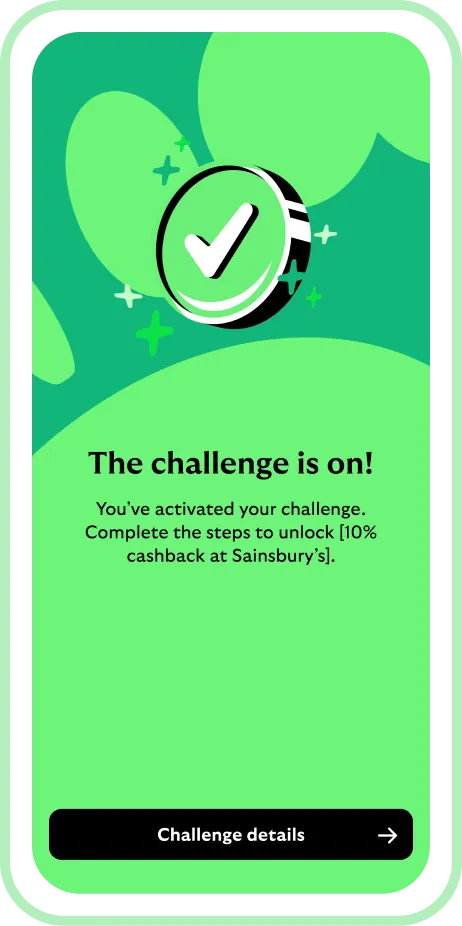
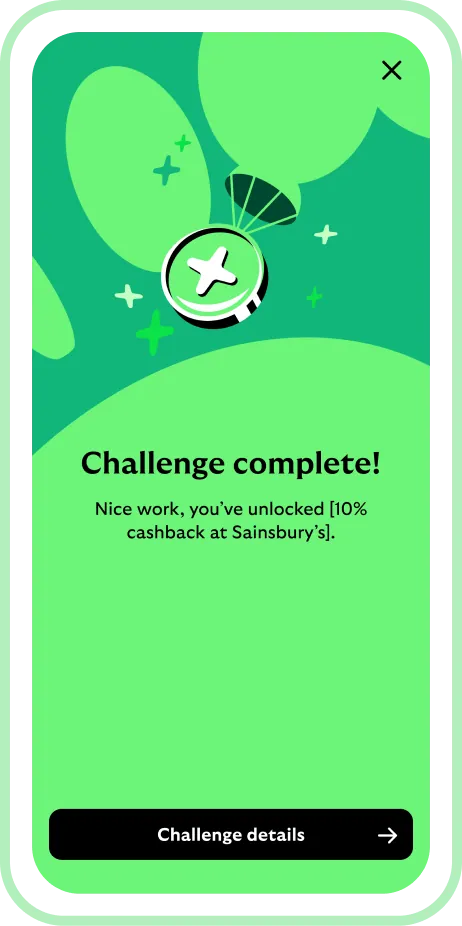
Screen recording of the animated activation and celebration screens. No audio.
Screen recording of browsing, activating and completing a challenge in the app. No audio.
What did I learn from this experience?
Prioritise gathering requirements
To set the team up for success, gathering requirements up front was essential to my design squad’s clarity, efficiency, confidence and collaboration. Because of business constraints and team capacity, requirements weren’t fully gathered up front, which caused bottlenecks, inefficiencies and team frustration. To mitigate this, I aim to liaise more closely with the wider business to better protect my squad, despite business pressure to proceed.
Keep stakeholders close, really close
Keeping important decision makers close to the project isn’t just good practice; it’s essential when gathering requirements, pivoting the roadmap and staying focused on the OKRs. My focus is design, and colleagues in other roles have foresight in their own areas of expertise.